 AI Briefing
nautilus_trader: Deploy Python strategy code to production without modification
nautechsystems/nautilus_trader
About the project
Designed to bridge the gap between Python vectorized strategy research and compiled-language-based production systems. The Rust native core provides a deterministic event-driven runtime, while Python serves as the control plane for strategy logic and system orchestration. This architecture allows strategy code written during the research phase to be deployed to production environments without modification.
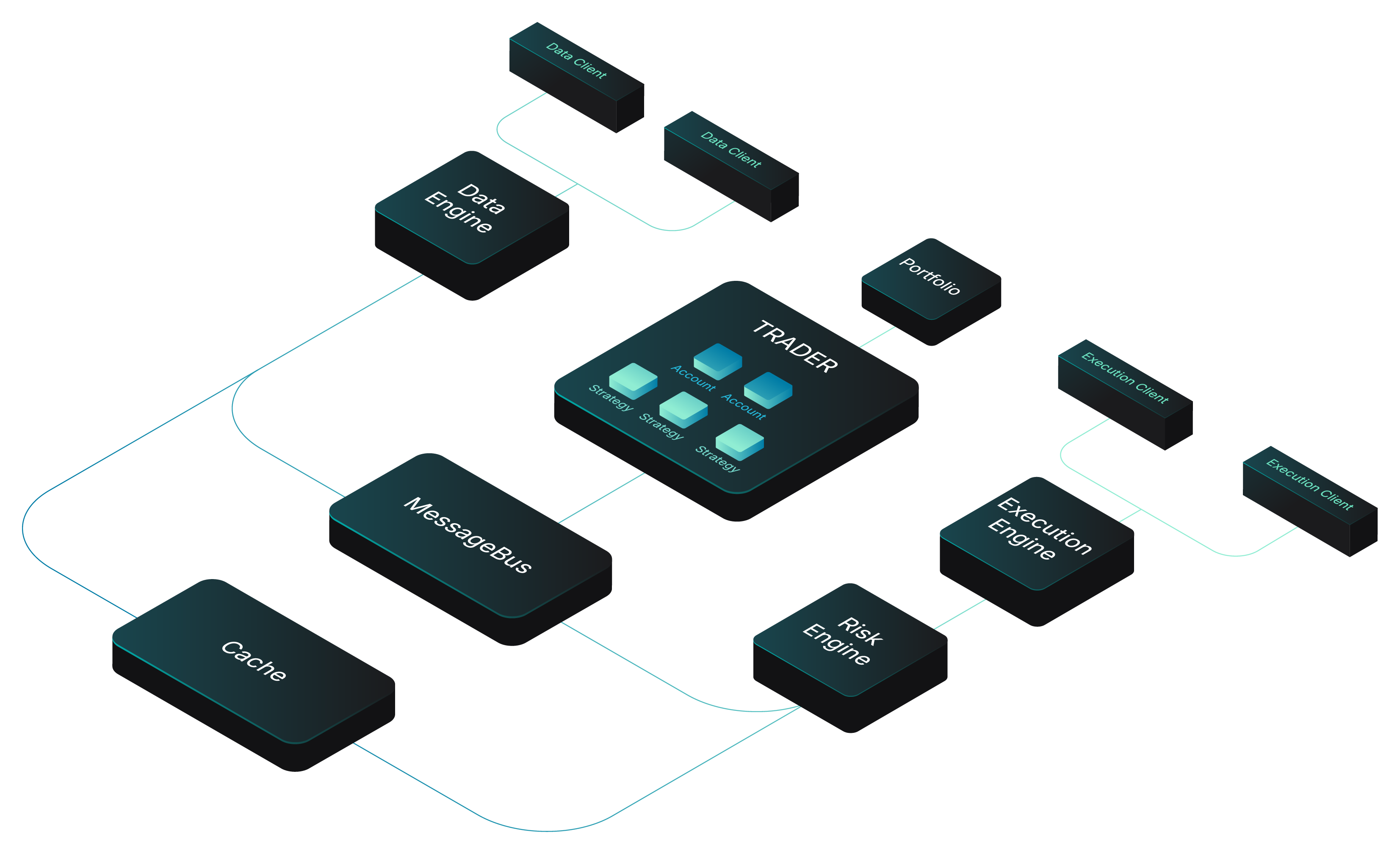
Modular adapters that are agnostic to asset classes connect to various exchanges and data providers using REST APIs or WebSocket feeds. Currently supports a wide range of markets, from cryptocurrency CEX/DEX platforms like Binance, Bybit, and Interactive Brokers to traditional markets including FX, equities, futures, and options. It also offers conditional order triggers such as OCO, OUO, and OTO, as well as advanced execution instructions like post-only and reduce-only.
Backtesting across multiple exchanges and strategies simultaneously is possible using historical data with nanosecond resolution, with the same execution semantics applied to both research and live trading. High performance and stability are ensured through Rust's type safety, the mimalloc allocator, and tokio asynchronous networking. Deployment is supported on Linux, macOS, and Windows environments using Docker.
Suitable for individual traders or small quant teams performing backtesting and live trading in a single-node environment. UI dashboards and distributed orchestration are not within the scope of support; the focus remains on the stability of the core engine and the sustainability of the ecosystem. For critical tasks, it is also possible to write the entire strategy in Rust.
nautechsystems/nautilus_trader
Production-grade Rust-native trading engine with deterministic event-driven architecture
Rust
This introduction was generated automatically by AI. Check the original for the author's claims and context. Copyright belongs to the original author.
Our guide explains how the AI works. Report errors, attribution issues, or removal requests via Contact.