 AI Briefing
OpenViking: 91% Token Reduction, Context Exploration via ls Command
volcengine/OpenViking
About the project
Instead of the opaque results provided by traditional vector search methods, this enables agents to directly explore their own context using ls, tree, and find commands. By integrating memory, resources, and skills into a single virtual file system under the viking:// protocol, developers can deterministically manipulate context as if handling files.
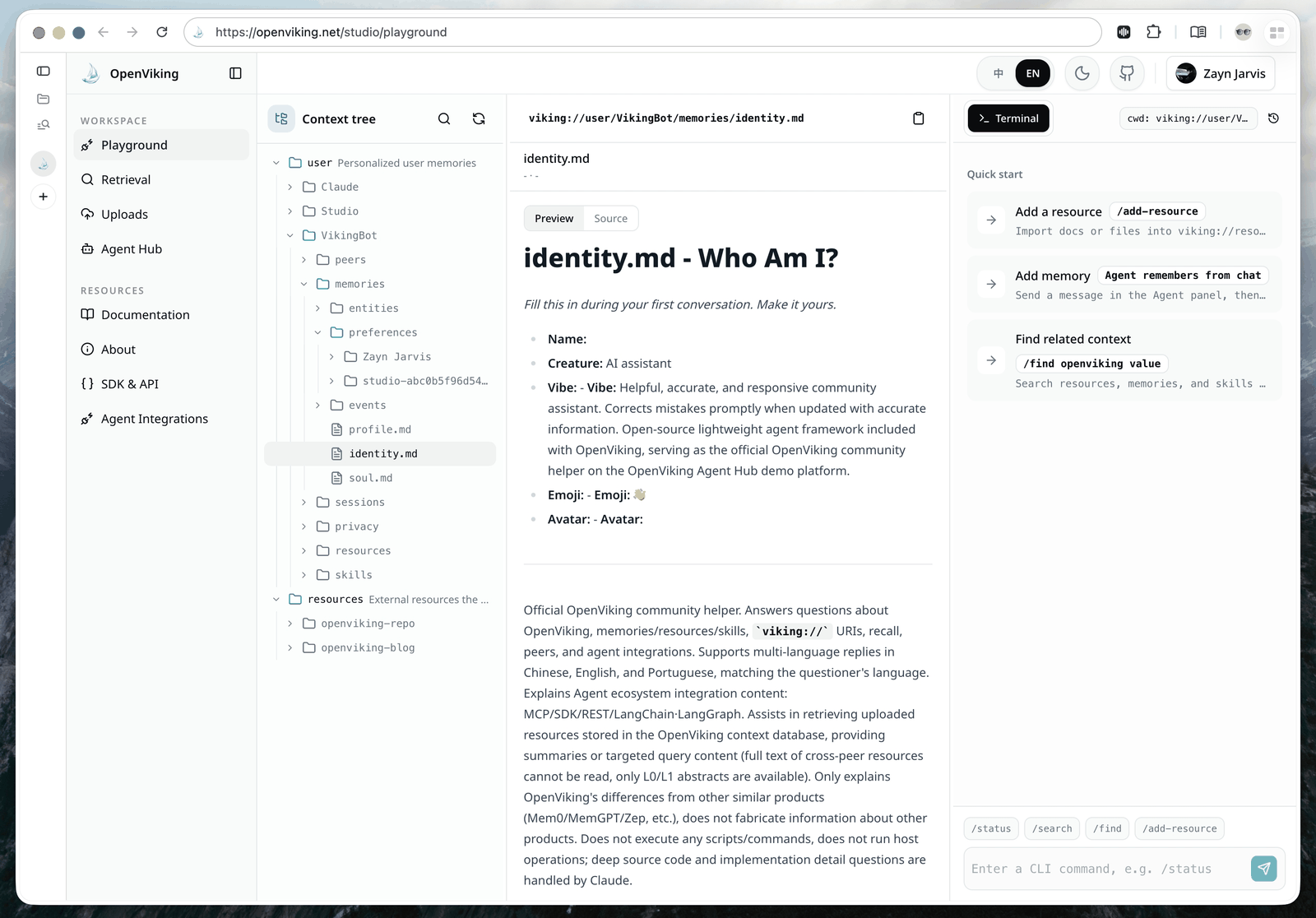
All content is processed in three levels: L0 (abstract), L1 (overview), and L2 (detailed), loading deeper content only when needed. This significantly reduces token consumption while returning results with directory paths during search, allowing developers to trace and debug the source path of results.
On the LoCoMo benchmark, it improved accuracy to 80–83% compared to native memory and reduced input tokens by up to 91%. On tau2-bench, it increased task success rates by up to 11.87 percentage points through experience memory. It integrates with major agent frameworks such as Claude Code, Cursor, and LangChain, automatically converting user preferences and experiences into long-term memory at the end of sessions.
Released under the AGPLv3 license, it has no feature limitations or account requirements. Managed SaaS from Volcengine and self-hosting options are also available. The OpenViking Helper desktop console for macOS and Windows allows visual management of local agent configurations and session trace inspections.
volcengine/OpenViking
Self-evolving Context Database for AI Agents. Unify Agent Memory, Knowledge RAG and Skills.
Python
This introduction was generated automatically by AI. Check the original for the author's claims and context. Copyright belongs to the original author.
Our guide explains how the AI works. Report errors, attribution issues, or removal requests via Contact.