 AI Briefing
FrontierAgent: Build a Team Instead of a Single Agent for Long-Term Research
ApodexAI/FrontierAgent
About the project
FrontierAgent is an open-source agent runtime for long-term research and file-based tasks. It provides a terminal-based TUI and includes two built-in workflows: ReAct mode, where a single agent processes tasks sequentially, and Agent Team mode, where multiple sub-agents collaborate in parallel. The process of decomposing complex requests into independent tasks, collecting results from each sub-agent, and integrating them into final deliverables is automated.
All file operations take place within a task-scoped sandbox. Input files are pinned as read-only, intermediate states are stored in the workspace, and final deliverables are saved separately in the output directory. Even during execution, new instructions can be injected at the next safe turn boundary, allowing direction to be adjusted without interrupting the current run. Changes go through an approval process, and the state can be reverted to any previous point using session checkpoints and local traces.
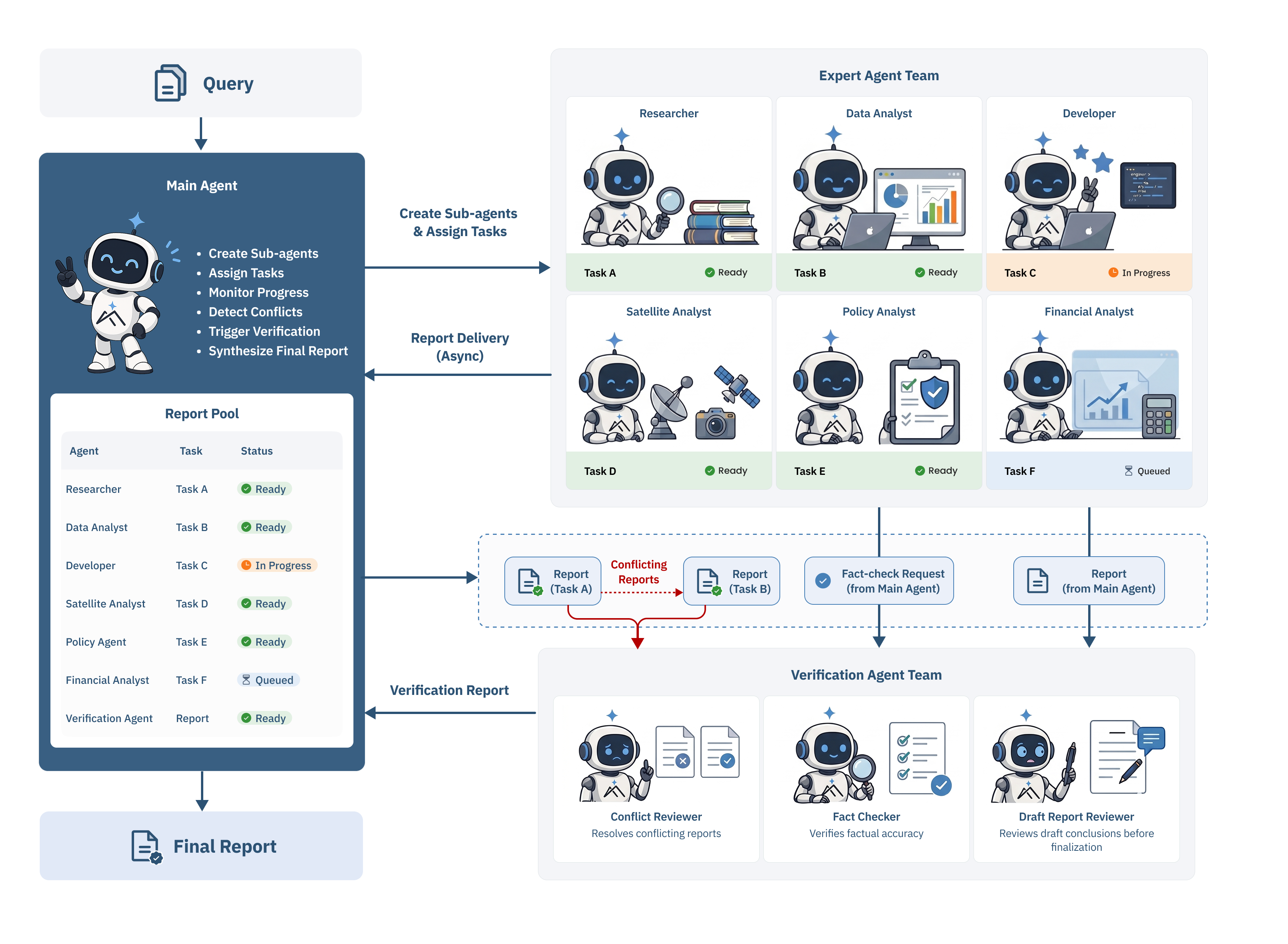
The framework, tools, workflows, and evaluation layers are independently decoupled, allowing selective reuse of each component. The included benchmark runner is used for research and file-based evaluations, supporting deterministic artifact collection and re-execution of individual failures. It runs on macOS, Linux, and Docker environments, and can be executed immediately with just an OpenAI-compatible endpoint, without requiring a hosted model.
ApodexAI/FrontierAgent
🧩 FrontierAgent, our agent framework, open-sourced alongside it — native command-line TUI, ReAct and Agent Team modes, one command on macOS and Linux, no preinstall, no hard Docker dependency.
Python
This introduction was generated automatically by AI. Check the original for the author's claims and context. Copyright belongs to the original author.
Our guide explains how the AI works. Report errors, attribution issues, or removal requests via Contact.