 AI Briefing
laya: Non-Autoregressive Engine Classifies and Decides in 100 Languages in 33ms
NandhaKishorM/laya
About the project
This is a non-autoregressive decision engine that completes classification and judgment in a single forward pass without text generation. It accepts various input states such as emails, tickets, and JSON, and immediately returns structured results in the form of choice, score, or probability (noul). Unlike generative models, it eliminates the risk of parsing errors or hallucinations, enabling highly reliable automation.

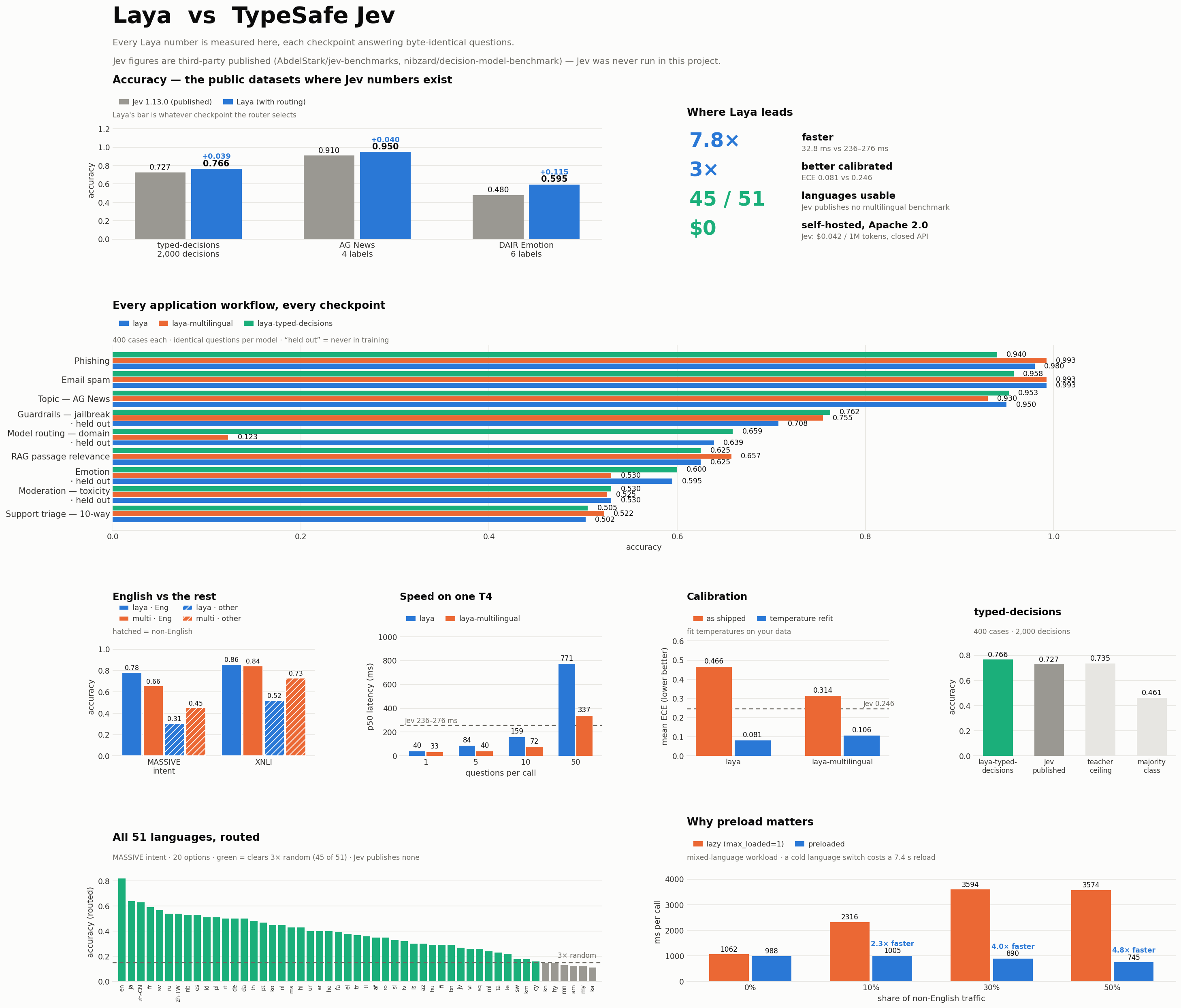
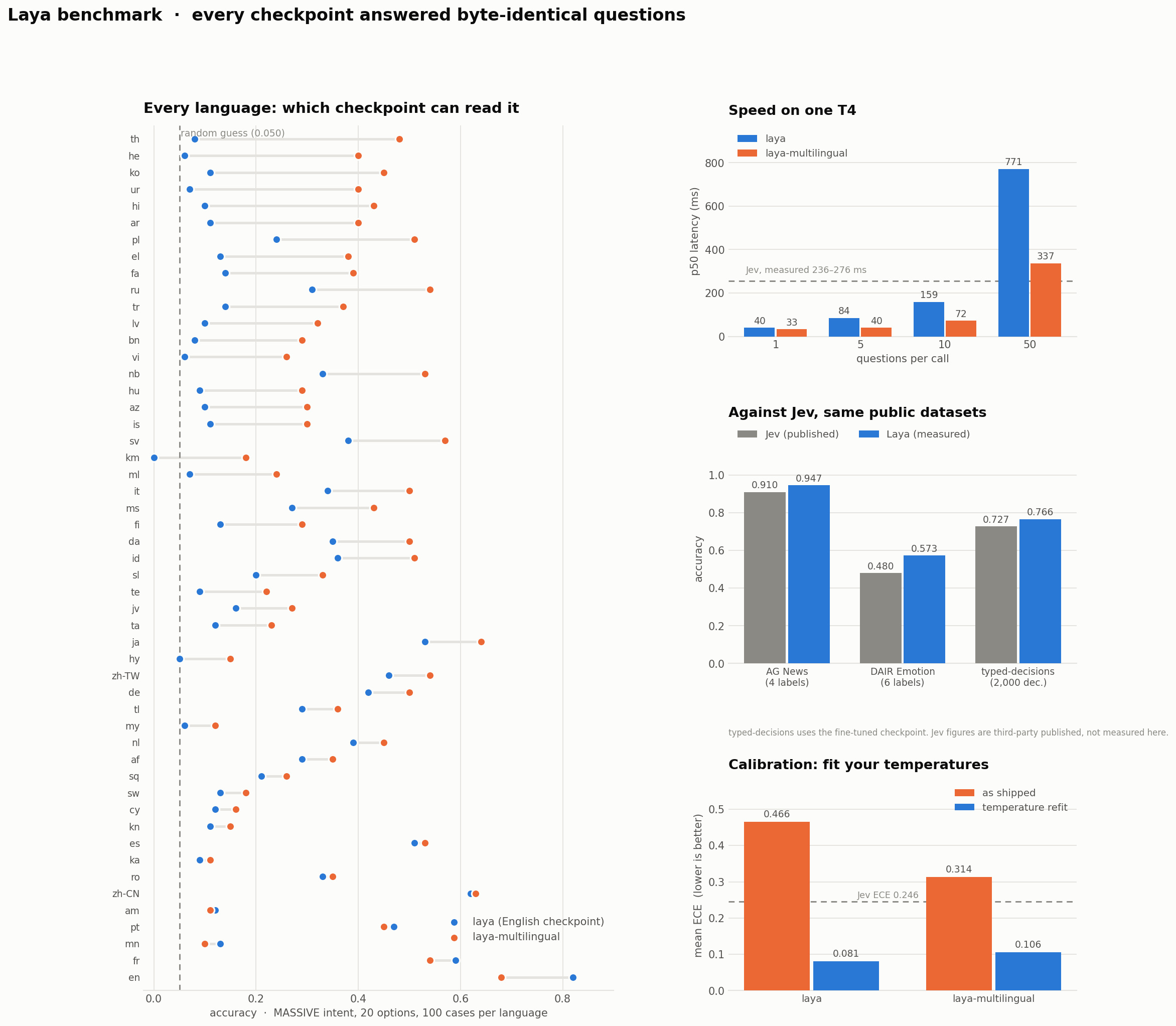
It delivers ultra-low latency performance, processing a single query in 33ms on a T4 GPU and 7.2ms per query in batch mode. It includes three checkpoints: an English-only model, a multilingual model supporting over 100 languages, and a model optimized for specific workflows. It automatically routes requests to the most suitable model by detecting the request language and task type, with the option for manual specification if needed.
Trained via reinforcement learning based on Strictly Proper Scoring Rules, the probability values are statistically significant. It facilitates easy implementation of Confidence Gating logic, which automatically processes items with high confidence scores and escalates those with low scores to human agents. It offers four pre-configured workflows: model routing, prompt guardrails, content moderation, and ticket classification.
It is suitable for global services requiring multilingual support, customer service automation where real-time classification is essential, and security filtering systems. It addresses the limitations of existing English-centric models, whose performance drops sharply in non-English languages, by maintaining accuracy through the selection of the correct checkpoint based on language detection. It is licensed under Apache 2.0, allowing free commercial use.
NandhaKishorM/laya
Non-autoregressive System 1 decision engine. Typed choice, score and yes/no decisions over any text in a single forward pass, in 100+ languages, with a router that picks the right checkpoint per request.
Python
This introduction was generated automatically by AI. Check the original for the author's claims and context. Copyright belongs to the original author.
Our guide explains how the AI works. Report errors, attribution issues, or removal requests via Contact.